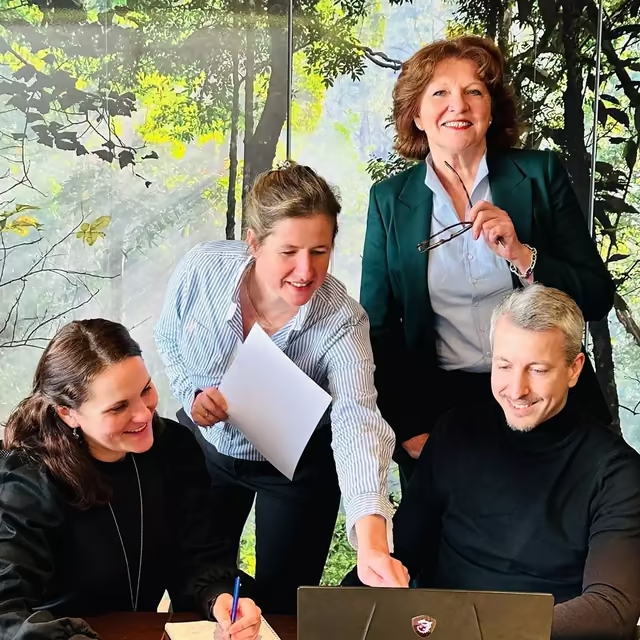
Your business deserves a digital partner that works for you
Does your business need to present several activities, inform different audiences or coordinate content from several teams? Qreative plans a website around those journeys: exploring expertise, viewing an offer, applying for a role or reaching the right contact. Content, languages and publishing roles are defined before technology choices. Your visual identity brings consistency to the pages; catalogue, recruitment and connected-tool features require specific scoping. The quote clarifies deliverables, access and responsibilities, according to your uses and the resources available within your organisation.


A business website may need to serve several audiences and activities: customers, candidates, partners or colleagues contributing content. We identify the information and journeys required for each use. Expertise pages, offers, completed work and contacts are organised with a consistent visual hierarchy. Page numbers and languages depend on available content and the people preparing and approving it.
We then clarify who publishes, who approves and who receives enquiries. Access, forms and connections to your tools need defining before implementation, with their limits and support arrangements. These needs can also apply to an SME; our SME website service covers a project centred on services and contacts for a team handling several roles. Uses guide the choice. Hosting, copywriting, training, maintenance and analytics are scoped in the quote, rather than presumed included.

A website that embodies your business
A business website may serve several activities and audiences. We identify information expected by customers, candidates or partners to build a readable structure. Offers, completed work and contacts are presented with a consistent hierarchy, using available content and languages required for the project.
Preparation clarifies who supplies and approves each set of information. Teams may contribute at different stages, so feedback needs shared organisation. We plan pages and designs around those uses, then describe deliverables and approval stages in the quote, alongside responsibilities retained by your organisation and material to prepare.
Give your business a competitive advantage
To present your expertise, visitors need to understand who each offer serves and which questions it addresses. We review positioning and information to explain: services, conditions, completed work or contacts. That preparation helps avoid similar pages repeating the same arguments without clarifying a particular decision for the reader.
Content and design then give available evidence an identifiable place: documented work, authorised visuals and verifiable information. Links connect those examples with relevant offers. We work on journey clarity and contact routes; commercial results need separate monitoring and also depend on your activity, how enquiries are handled and the offer itself.
A digital strategy designed for your growth
A useful content strategy organises the expertise, audiences and questions that matter to your business. We prepare titles, text and links that help readers understand each topic and reach related information. Publishable examples are connected to relevant pages, without turning documented work into an unsupported commercial result.
Relevant searches help examine information needs and page roles. Languages and updates require people available to prepare and review content. Monitoring after publication, if selected, can show discovery, queries and clicks. Those observations help prioritise further editorial work and need interpreting alongside the available data, rather than treated as proof of sales.
An easy and efficient user experience
Each audience should find useful information and the right contact. We organise menus, links and calls to action around defined journeys: exploring expertise, viewing an offer, applying for a role or sending an enquiry. Visual choices support that reading, using labels and a hierarchy suited to your business content.
Designs let your teams review journeys before integration. Planned checks cover selected displays, links and forms. Interaction measurement can complement this work when scoped. Ongoing adjustments and analysis after launch are a defined service, with agreed access, indicators and responsibilities, rather than an automatic continuation of every website creation project.
A website adaptable to all devices
Your business audiences read content on different screens and in different contexts. We prepare responsive layouts for the selected formats. Navigation, text, media and contact routes are reviewed using project content, so essential information remains readable and actions identifiable along the intended journeys.
Verification criteria are defined around needs: screen width, keyboard use, contrast or form fields. Findings help prepare corrections and document observed limits. Accessibility audits or specialised tests require separate scoping; mobile adaptation does not provide exhaustive validation of every situation. Selected checks and responsibilities are identified in the project deliverables.
Steer your results and keep progressing continuously
Monitoring a business website starts with questions to clarify: which pages are discovered, which offers are viewed and which enquiries reach your teams? We review indicators, access and available sources. Search, visit and contact data cover different scopes and should be interpreted with their limits, alongside the questions your organisation needs to answer.
If monitoring is selected, we agree tools, configuration and review frequency. Reports, alerts and interventions are scoped in the quote with the people responsible. Findings help prioritise content or journey improvements; they do not replace your teams’ qualification of enquiries and sales or their own commercial follow-up.

What dedicated experts can truly bring you
A business website is organised around more than its appearance. We start with the audiences, activities and information to connect: which services should a customer understand, where does a candidate find an offer and whom does a partner contact? Answers guide the journeys and page structure. Your teams identify existing content, its owners and the information requiring approval before publication, so responsibilities can be discussed alongside the designs.
Content management should make responsibilities clear: contribution rights, approval, updates and enquiry handling. A technical integration also requires defining exchanged data, connected tools, access and their administrators. These choices are discussed before development, with an agreed scope and checks, instead of a feature list presumed suitable for every organisation. Available people, content and tools help decide what can be prepared and maintained.
The FGME case illustrates detailed technical content organised to present engineering and industrial integration services. It describes a WordPress/Elementor build and its presentation choices, without proving a multi-team publishing workflow. Your own editorial organisation still needs defining; roles, approvals and work after launch are specified in the proposal according to the responsibilities you retain or delegate.
The Qreative approach: build, optimise, and evolve
We identify audiences, activities and content to connect: customers, candidates, partners or contributing teams. Each information item needs an owner and approval. This preparation helps select pages, languages and journeys before describing deliverables and access in the quote with the people involved, using the content and resources available.
Designs show how each audience finds useful information and reaches the right contact. We organise offers, expertise, completed work and contact routes in a readable order. Your teams can review journeys and content before integration, identifying missing information, required languages and approvals to prepare for the project.
Technical choices follow uses, content volumes and required connections. Media, access, CMS and hosting are reviewed with their dependencies. Checks cover selected formats and journeys; connecting another tool requires defining exchanged data, limits and the people who will administer it after launch, alongside support arrangements.
Editorial content and advertising campaigns address different needs. We identify audiences, landing pages and actions to measure before selecting support. Writing, distribution, media budgets and monitoring are scoped separately in the quote. Findings guide adjustments without presuming new sales or an ongoing advertising service included in the build.
Your visual identity and available content guide the presentation of offers and expertise. Typography, colours, images and hierarchy make pages recognisable. We distinguish supplied material from work to produce, then organise review with your teams before integrating the languages and formats selected for the project.
Monitoring after launch is defined by questions to clarify and the people responsible. Depending on selected services, we review searches, visits or interactions with their measurement limits. Reports, review frequency and interventions are scoped in the quote; qualifying enquiries and sales remains a task for your teams.
Our support doesn’t stop at creating your digital space: we help you build a coherent ecosystem around your project. Whether you are a real estate agency, a nonprofit association, or a restaurant, we combine graphic design, photo and video reporting, writing, targeted campaigns, or editorial optimisation to give your presentation more impact. Selected services are scoped in the quote, with follow-up, a working framework and content to prepare, alongside tasks retained by your teams.
We also work on more specialised areas to support your growth: ongoing maintenance, social media management, newsletters, in depth audits, training to define, support on Webflow, WordPress, or Odoo, smart copywriting, and local optimisation in Nivelles or Brussels. We also guide you on the status of the Digital Maturity Voucher (new applications suspended), the Digitalisation Grant, or the Digit Online Loan subject to each scheme’s conditions.
A controlled process to build your universe
With the people involved, we identify the audiences and journeys: services, contacts, possible applications and partner information. Each content item needs a responsible person and an identified approval stage. Page structure and designs make these choices visible before integration. Languages, documents, existing pages and available access help prepare scope, deliverables and the approvals expected from your team during the project.
Features and connections to tools are described through their uses, data and access rights. Once approved content is integrated, checks cover agreed journeys, forms, links and selected screen sizes. We prepare publication and access handover arrangements. Training, maintenance and future changes are scoped in the quote with responsibilities after launch; another feature or language requires reviewing its content, dependencies and tests. The people involved should understand which tasks remain theirs and which are delegated.
In a crowded marketplace, fitting in is a failure. In a busy marketplace, not standing out is the same as being invisible.
Seth Godin
FAQ
How can I tell whether an online presence can truly help my business?
A website can help audiences understand your activities and find relevant information: services, completed work, vacancies or contacts. Start with real questions and intended actions. Available content, languages and the people responsible for keeping it current guide the project and its priorities.
Use available feedback and measurements to assess usefulness: information found, enquiries received and their quality. An online presence does not guarantee a large audience or new sales. Define goals and measurement limits to evaluate results in the context of your activity, without assuming worldwide reach.
How can you reach a wide audience through this online space?
First define intended audiences, their questions and useful languages. The website should explain your activities and the information people seek. Titles, content and links help make those pages understandable.
Share relevant pages through suitable channels, with their own resources and goals. Actual reach depends on distribution, demand and competition; it needs measuring after publication, without a guaranteed audience size.
Can you customise a space without technical skills?
A CMS and suitable rights can allow changes to copy, images and selected pages. Available tasks depend on the site and planned components, and are agreed with the people publishing content.
Another structure or feature may need technical work. Training and support are scoped in the quote; access to an editor does not automatically make every part safe or simple to change.
Are there free solutions to get started?
Free or trial offers can help test a tool and prepare content. Review their limits before choosing: domain, supplier branding, data export, features, access and costs as your requirements change.
Suitability depends on the project, not just the starting price. Compare total costs and responsibilities: integration, content, maintenance and possible transfer. A free tool is not necessarily unsuitable; agency involvement requires reviewing what can be retained or migrated.
How can this space be maintained over the months?
Agree who keeps information current: contact details, services, offers and documents. Publishing rights, review and update frequency depend on your organisation. CMS access may cover selected editorial tasks performed by your team.
Technical maintenance is distinct: updates, backups, checks and interventions need defining in an agreement or quote. Specify scope, access and response arrangements without assuming permanent availability or freedom from every technical risk.
How can I measure the effectiveness of my online presence?
Define indicators tied to goals: pages viewed, relevant searches, enquiries and contact quality. A visit, interaction and sale are different observations, requiring separate interpretation.
Compare data over consistent periods, considering tools, consent and measurement limits. A review can identify improvements; it does not automatically prove increased sales or the cause of a change.
What are the prices for designing and setting up your own website?
The quote depends on pages, languages, content and features. A new build, redesign, data transfer and tool integration require different work. It specifies deliverables, approvals and material your team must provide.
Distinguish costs after launch too: domain, hosting, licences, maintenance and support. Training, writing and changes are scoped to your needs. Compare equivalent scopes; website creation does not guarantee a financial return or payback period.
Why move your connected presence forward with our agency rather than on your own?
An agency can help scope the project and organise decisions: audiences, information, features, access and approval stages. Its work may cover design, integration and checks, according to the services selected. Your team contributes knowledge of the activity, supplies available material and approves choices; these contributions remain necessary when preparing the website and its content.
Assess the collaboration through an understandable scope, relevant completed work and identified responsibilities. Compare deliverables, communication, access handover and support conditions. Guidance does not guarantee an effortless process, particular reach or commercial outcome; it organises work and approvals with the people involved, including the tasks your team retains after launch.
Are there different formats for presenting an activity?
The format depends on audiences and content to organise: a short presentation, expertise pages, a catalogue or recruitment area. A simple activity may need few pages; several offers may require distinct journeys.
We review available information, languages and publishing responsibilities to define a proportionate structure. Features, page numbers and future changes are then scoped in the quote.
Does a Belgian organisation need to comply with specific requirements?
Your languages and contact details depend on your audiences. Business identification information must be accessible; other requirements vary with your activity and the website’s features.
Plan review of notices and content with the appropriate adviser. We scope their integration; building the website does not constitute legal validation of all your organisation’s obligations.
Comprehensive expertise to support your growth
A business website should organise information for your audiences and contributions from the people involved. We prepare structure, content and approval stages around those uses. Tools are chosen alongside a clear scope, defined responsibilities and follow-up arrangements agreed for your project.
-
Audiences and uses : Customers, candidates and partners may need different information. We plan useful journeys and displayed contacts with the people responsible for preparing and reviewing content.
-
Consistent presentation : Mockups, visuals and copy organise how pages are read. Your identity and available content guide decisions, with approval stages before the material is integrated.
-
Defined editorial management : Contributions, reviews and updates are assigned to the people involved. CMS and access rights depend on those tasks, the resources available and the responsibilities retained by your team.
-
Useful structure and links : Expertise pages, completed work and practical information should be connected understandably. Titles and internal links support that journey without guaranteeing search rankings.
-
Clear scope and costs : The quote specifies pages, languages, features and content. Domain registration, hosting, licences, training and maintenance are considered alongside tasks your team already handles.
-
Specified integrations : Connecting a tool requires describing exchanged data, access, dependencies and administrators. Limits and tests are defined before implementation with the people responsible.
-
Agreed checks : Journeys, forms, links and display are checked against selected criteria. Observations help plan corrections and publication approval; they do not remove every future technical risk.
-
Features suited to uses : Recruitment, a catalogue and commercial enquiries require distinct journeys. Each feature is defined through its data, recipients and management arrangements after launch.
-
Content to maintain : Another activity or language needs information, approval and tests. We review those needs with your team before defining the change, its cost and its schedule.
-
Follow-up responsibilities : Tasks retained by your team and delegated work are identified. Training, assistance and technical interventions are scoped in the quote, without presumed permanent availability.
A business website is prepared around audiences, content and responsible people. Presentation, integration and support choices are defined through the intended uses and the resources available.
The FGME case shows detailed technical content organised in a WordPress/Elementor website: identifiable services, navigation and content management. Explore those choices when preparing your pages; this case does not document a multi-team publishing workflow or a measured commercial gain.