

Search Engine Optimization (SEO): A Complete 2025 Guide to Boost your Online Visibility
On an internet where competition grows every day, appearing on the first page of Google is no longer just an advantage, it’s a matter of digital survival. Search engine optimization (SEO) remains the most sustainable way to increase a website’s visibility. Unlike paid advertising, it relies on relevance, content quality, and the trust you build with search engines.
In 2025, SEO is no longer about placing keywords in a text. It combines strategy, user experience, and technical optimization. At Qreative, we see SEO as a discipline of balance: understanding how algorithms think while connecting with real human emotions. This blend of precision and meaning is what we bring to every business we support.

Key takeaways
- SEO is built on three pillars: technical foundation, content, and popularity.
- It’s a long-term effort designed to make your website sustainably visible.
- Strong Google SEO relies on analysis, consistency, and regular updates.
- The goal isn’t just to appear in search results, but to attract qualified and loyal traffic.
1. What is search engine optimization?
Search engine optimization (SEO) refers to all the techniques used to optimize a website so that it appears in search results without relying on paid advertising. It’s also known as “organic ranking.”
Search engines like Google use a set of algorithms to analyze each web page: structure, content, links, tags, images, loading speed, and more. The goal is to display, in response to a query, the most relevant and trustworthy pages.
The three dimensions of SEO
- Technical SEO: ensuring a solid foundation (clear structure, clean code, fast and secure website).
- Editorial SEO: creating high-quality, useful, and consistent content that meets search intent.
- Off-page SEO: building the site’s popularity through trusted external links.
Good SEO is therefore a combination of technical expertise and a strong sense of communication. That’s where an SEO agency like Qreative comes in, translating Google’s requirements into a human and coherent natural referencing strategy.
2. How does search engine optimization work?
To understand SEO, you first need to grasp how a search engine operates. When a user types a query, Google scans billions of indexed pages and selects those that best match the search intent. This process is based on three main stages: crawling, indexing, and ranking.
Crawling is performed by bots that browse the web by following links between pages. Indexing then involves storing these pages in the search engine’s database. Finally, the algorithm evaluates the relevance and quality of each piece of content to determine its position in the results.
The main criteria considered by search engines:
- The site’s technical structure (speed, mobile compatibility, HTTPS security).
- The quality and relevance of the content in relation to the query.
- Inbound links (or backlinks), which indicate the level of trust a site receives.
- The user experience, including ease of navigation and time spent on pages.
Google constantly updates its algorithms to deliver the most reliable and relevant results. In 2025, updates are becoming more frequent, and trust and expertise factors (E-E-A-T: Experience, Expertise, Authoritativeness, Trust) play an increasingly central role.
3. Building an effective SEO strategy
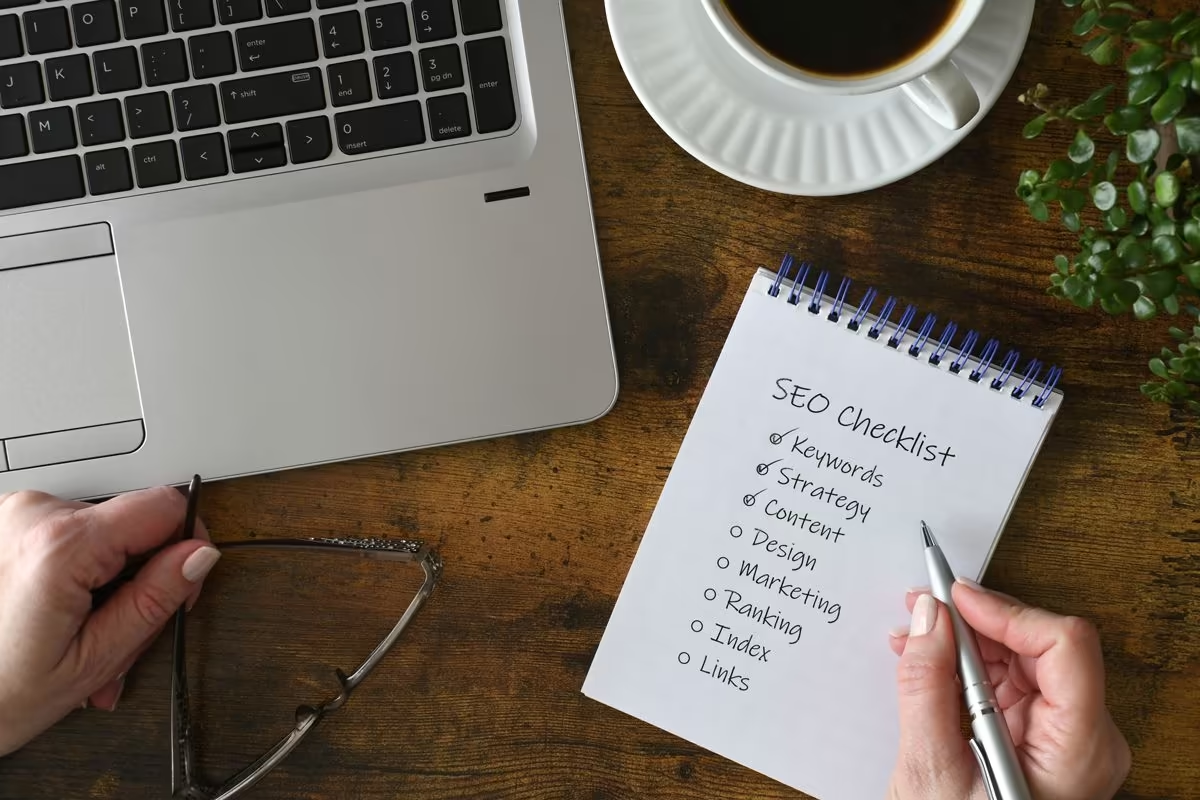
Developing a successful SEO strategy requires a structured, patient, and measurable approach. SEO isn’t a series of isolated actions but a holistic process that combines technical optimization, content creation, and ongoing analysis. Striking the right balance between performance and relevance is what enables a website to achieve lasting progress in search results.
The audit: understanding before acting
Every solid SEO strategy begins with an audit. This stage involves assessing the website on several levels: technical, editorial, and competitive. It measures loading speed, code quality, internal linking structure, and also evaluates the performance of existing pages and the relevance of the keywords used.
Keyword research
Keywords are the entry points to your site in search engines. Choosing the right ones means understanding how people think and which expressions they actually use. It’s important to distinguish broad queries (high volume but high competition) from long-tail expressions, which are more specific and attract qualified traffic.
Semantic analysis goes beyond individual words. It helps uncover the intent behind each search informational, transactional, or navigational.
Editorial structure
Once user intent is identified, it’s time to build a clear editorial plan. Each page should have a specific goal and a well-defined topic. Content should guide the reader while staying consistent with the site’s structure ; categories, service pages, and blog posts.
Internal consistency plays a key role: links between pages should create a smooth journey, helping both search engines and users understand the content hierarchy.
Monitoring and evolution
An SEO strategy never really ends. Algorithm updates, shifts in user behavior, and competition make constant adaptation essential for maintaining visibility.
Monitoring is done through tools like Google Search Console, Google Analytics, or specialized platforms such as SEMrush and Ahrefs, which provide a clear view of rankings, traffic, and overall site health.
Regular data analysis allows you to refine your strategy, strengthen what works, and quickly address weaknesses.

4. Local SEO: a powerful lever for small businesses
Local SEO is designed for businesses that want to attract customers nearby. Whether you’re a shop, a practice, or a craftsman, appearing in Google’s local results has become essential.
Strong local visibility relies on consistent information and proximity to the customer. This involves optimizing your Google Business Profile, adding recent photos, updating opening hours, and actively managing customer reviews. These signals build trust with both users and search engines.
It’s also a good idea to regularly publish localized content such as news, events, testimonials, or case studies. By associating city or regional names with specific keywords, your site becomes more relevant for local searches.
Finally, listing your business in reliable local directories and maintaining consistent contact details (name, address, phone number) across all platforms are key to strong rankings.
Local SEO goes beyond technical aspects ; it’s about highlighting a company’s real presence in its community and strengthening trust between brand and customer.
5. Link building: strengthening your site’s reputation and authority
Link building, also known as off-page SEO, remains a key factor in any natural referencing strategy. It refers to all actions aimed at obtaining inbound links (or backlinks) from other websites. These links play a decisive role in how Google ranks a site, as they signal the popularity and credibility of a domain.
A backlink acts like a recommendation: the more high-quality links your site receives, the more trustworthy it appears. The goal isn’t to collect as many links as possible, but to focus on relevance. A single link from a reputable media outlet or a professional website in your field is often more valuable than several links from questionable sources.
Best practices for link building
An experienced SEO specialist will focus on creating useful content that naturally attracts links. This can include:
- Publishing guest articles on partner blogs or specialized platforms
- Sharing research studies or practical guides with real added value
- Designing infographics or videos that are easy to share
- Taking part in online events or cross-company collaborations
Effective link building relies on a balance between quality and diversity. Anchor texts should sound natural, and links should be distributed across different types of pages (articles, product sheets, case studies, etc.) to avoid penalties.
What to avoid
Some practices should be avoided entirely: mass link buying, artificial networks, automated exchanges, or over-optimized anchors. These methods go against Google’s guidelines and can harm your rankings, jeopardizing long-term SEO results.
Good link building is built patiently, like a relationship of trust. It requires long-term effort, well-structured content, and real value for your audience.

6. Essential SEO tools to track and optimize performance
Search engine optimization relies as much on content creation as on data analysis. In 2025, many tools make it possible to evaluate a website’s visibility, track its rankings, and improve its optimization for search engines.
These solutions have become essential for SEO consultants and businesses that want to measure their traffic and the effectiveness of their efforts.
Must-have free tools
- Google Search Console: provides detailed insights into queries, clicks, impressions, and page indexing.
- Google Analytics 4: helps analyze visitor behavior, identify traffic sources, and track conversions.
- PageSpeed Insights: ideal for detecting and fixing loading speed issues.
- Google My Business: essential for local SEO, managing customer reviews, and maintaining visibility on Google Maps.
Professional SEO analysis tools
To go further, specialized platforms such as SEMrush, Ahrefs, Screaming Frog, or Ubersuggest offer advanced features including SEO audits, keyword tracking, backlink analysis, competitive studies, and optimization recommendations.
A skilled SEO expert uses these tools wisely: it’s not about tracking everything, but focusing on key indicators such as visibility, click-through rate, technical performance, and domain authority.
The importance of continuous monitoring
Regular audits help refine your strategy based on market trends and algorithm updates. Search engines frequently change their ranking criteria, and consistent monitoring ensures ongoing adaptation. SEO is, above all, a process of steady improvement ; every update matters.
The right words, lasting impact
Qreative creates content that combines marketing strategy, SEO optimization, and high-quality web creation. We write copy designed to boost your ranking, strengthen your position in search results, and highlight your business. Every project is a tailored setup — clear, precise, and results-driven.
7. SEO ranking factors in 2025
In 2025, search engines have evolved into intelligent systems capable of understanding the meaning and relevance of text. Google no longer focuses only on keywords ; it now evaluates the context, structure, and added value of every web page.
Key factors considered
- User experience (UX): a clear, fast, and pleasant site remains a top priority. Loading speed, readability on desktop and mobile, and intuitive navigation all have a strong impact on rankings.
- Content: quality outweighs quantity. Articles on a given topic should be rich, well-structured, and regularly updated.
- Links: both internal and external links help search engines understand your site and strengthen its authority.
- Reputation: reviews, mentions on other platforms, and social media presence contribute to overall evaluation.
- Technical signals: meta and title tags, clean HTML structure, domain reliability, and proper URL use.
The importance of quality content
Google’s latest updates reward content that demonstrates expertise and trustworthiness (E-E-A-T principle). A good piece of writing should not only inform but also help readers understand and take action.
Strong content is structured, engaging, and supported by relevant visuals such as images, videos, or infographics. These elements enhance online presence and increase conversion rates.
8. How long does it take to see SEO results?
Search engine optimization requires patience. Unlike SEA (paid search), results don’t appear instantly. Search engines need time to analyze, index, and evaluate your site’s relevance over several months.
On average, a professional website begins to see visible progress after 3 to 6 months, but achieving stable rankings can take up to a year depending on the industry and competition.
The most successful web pages are usually those that benefit from regular updates and long-term content growth.
It’s important to remember that SEO is a gradual investment: the more consistently a site works on its strategy, the more sustainable its results become. The key is to stay consistent, monitor key performance indicators (traffic, click-through rate, conversions), and keep refining your actions over time.
9. Les grandes tendances SEO de 2025
L’écosystème web évolue vite, et les stratégies SEO doivent suivre ce rythme. En 2025, trois tendances principales transforment la façon dont les sites sont référencés et utilisés. En voici la liste:
L’intelligence artificielle et la recherche conversationnelle
Les moteurs adoptent désormais des modèles d’IA capables de comprendre le langage naturel. L’expérience utilisateur passe avant tout : les articles doivent répondre à des questions concrètes, anticiper les besoins et optimiser le référencement autour de la recherche comme Google Search Generative Experience (SGE).
Le SEO vocal et mobile
Les recherches vocales explosent : on ne tape plus, on parle. Cela implique des phrases plus longues, un ton naturel et une structure fluide. Les sites web doivent être adaptés aux mobiles, avec une navigation simplifiée et un temps de chargement réduit.
Le contenu multimédia et la donnée structurée
Les vidéos, données structurées, balises schema org et meta descriptions précises améliorent la visibilité dans la page de résultats. Ces formats enrichis attirent davantage l’attention et augmentent le taux de clic. Les moteurs cherchent de plus en plus à rendre le contenu visible de manière intuitive, via des carrousels, des snippets ou des résumés visuels.

10. Conclusion: SEO as a sustainable growth driver
In 2025, search engine optimization remains the most effective way to attract a qualified audience and build a lasting online presence. Unlike paid advertising, it’s not driven by budget but by content quality, site structure, and strategic consistency.
Implementing an SEO strategy means investing in digital capital that grows over time. Every article, link, and update helps strengthen a brand’s visibility and credibility.
Success in SEO depends on patience, discipline, and a deep understanding of how search engines work. By combining analysis, creativity, and technical expertise, any website can improve its ranking and become a recognized authority in its field.
What is the difference between Search Engine Optimization (SEO) and Search Engine Advertising (SEA)?
Search Engine Optimization (SEO) focuses on the organic improvement of a website’s visibility. It involves optimizing the structure, content, and technical aspects of the site to achieve higher positions in search results over time. SEO builds a sustainable presence based on content quality, relevance, and user experience. Search Engine Advertising (SEA), on the other hand, relies on paid campaigns where ads appear instantly in search results. It allows for immediate visibility and precise audience targeting through sponsored placements.
At Qreative, we use both approaches strategically: SEO strengthens long-term credibility, while SEA accelerates short-term results. Together, they form a complementary and measurable strategy designed to maximize your online performance.
Why should you work with an SEO agency?
A specialized agency like Qreative helps you save time and avoid mistakes that can hinder online visibility. An experienced SEO specialist understands how search engines work, knows how to structure an article meaningfully, and adapts the tone to the specific industry.
We work on every part of the website: technical setup, content, structure, and popularity. Our teams ensure the implementation of proper SEO practices, compliance with off-page standards, and tailored optimization for each target audience.
How can I tell if my website is well referenced?
A well-optimized website stands out through its ability to appear on the first pages of search results for the right keywords. This can be verified using free tools such as Google Search Console, or through more advanced platforms that analyze the ranking of each URL within the SERP.
Our agency’s main goal is to evaluate your project’s online visibility by examining key elements such as site structure, title tags, content quality, and link hierarchy. We then provide a clear report with practical recommendations to strengthen your optimization and improve your brand’s positioning.
What is the importance of title tags and meta descriptions?
These tags are essential for search engines. The title tag acts as the headline displayed in the SERP, while the meta description summarizes the content of the web page. Together, they encourage users to click and directly influence the click-through rate.
At Qreative, we ensure that every tag is carefully written with relevant keywords and a clear structure. This often-invisible part of the HTML code can make the difference between a page that stands out and one that gets overlooked.
How long does it take to improve your SEO?
Organic optimization is not instantaneous. It depends on the existing content, the level of competition, and the strategy implemented. Search engines first need to understand the site structure, internal links, and the quality of the content related to the topic.
Our SEO consultants create a personalized action plan for each project. We identify the most effective ways to improve rankings, strengthen internal linking consistency, and produce content tailored to your industry.
Why is content so important for SEO?
Content is the main resource that allows Google to understand what a page is about. An article isn’t just about keywords; it should inform, persuade, and engage. Search engines look for well-structured articles, clear headings, and precisely written text.
At Qreative, we create high-quality web content that explores each topic in depth. Every text is written with the reader in mind before the algorithm, ensuring smooth flow between sections, natural readability, and SEO consistency across the entire website.
What is the difference between technical SEO and editorial SEO?
Technical SEO focuses on the site’s functionality: tags, URLs, structure, loading speed, mobile compatibility, and security. It ensures that search engines can correctly index your pages and understand their hierarchy.
Editorial SEO, on the other hand, focuses on content creation: articles, product pages, service descriptions, and more. At Qreative, we combine both aspects to guarantee overall consistency, from HTML structure to meaningful and well-crafted writing that conveys your message effectively.
Why is it so important to focus on organic search in 2025?
Organic search remains the primary driver for building a strong online presence. Every year, billions of searches are made, and not being well ranked means leaving all the visibility to your competitors. Attention to every detail, from content to structure, directly impacts sales, brand awareness, and consumer trust.
At Qreative, we approach each project as a unique strategy. Every website has its own specific definition, distinct audience, and precise needs. Our experts create a clear list of actions and off-page improvements to ensure consistent visibility across desktop and mobile. Our method combines SEO techniques with a human perspective for results that are both lasting and measurable.
Do you need to be active on social media to improve your SEO?
Social media doesn’t directly affect web page rankings, but it contributes to content distribution and overall site visibility. A shared post can generate external links, traffic, and engagement, all of which help strengthen online reputation.
Qreative includes social platforms as part of its global strategy. We help our clients use them as a visibility booster, ensuring each post creates an amplification effect around their content and enhances their digital presence.
How can Qreative help you improve your SEO?
Our digital agency supports every business in implementing a comprehensive SEO strategy that includes auditing, content creation, technical optimization, and link management. We tailor each action to your core activity and specific needs.
Through a clear and collaborative approach, our teams work to improve your optimization while preserving your brand identity. At Qreative, we believe SEO should be human, measurable, and sustainable — a custom process designed to achieve tangible results.
Can browsers or JavaScript affect a website’s SEO?
Yes, browsers and JavaScript play a role in how a website is indexed. Poorly interpreted content in certain browsers or overly heavy scripts can make it harder for search engines to read your code. It is therefore essential to test how your site renders on both desktop and mobile, and to ensure that every page remains accessible even if JavaScript is disabled.
At Qreative, we address these technical aspects from the very beginning. Our experts make sure that off-page elements and scripts do not interfere with content analysis. Taking browser behavior into account helps maintain optimal visibility, ensure a smooth user experience, and prevent any loss of ranking in the SERP.
What are the best SEO techniques to adopt in 2025?
The most effective SEO techniques rely on three key pillars: high-quality content, a clear structure, and continuous optimization. It’s no longer about overusing keywords, but about building a reliable resource supported by well-structured articles and coherent internal linking. For instance, a well-crafted guide can generate billions of impressions over time if it truly meets user expectations.
Our SEO consultants prepare a detailed action plan for each client, listing priority steps such as improving internal linking, adjusting tags, verifying URLs, and creating structured content. This method combines technical expertise and editorial strategy. At Qreative, we help you apply the key principles of modern SEO and strengthen your ranking sustainably across search engines.
Related articles

Creating an Editorial Calendar: The Key to Organized and Effective Communication
Publishing without an overall vision means losing impact and consistency. An editorial calendar helps you plan your content, align your teams, and give meaning to every publication. As a true pillar of your communication strategy, it turns ideas into concrete, measurable actions while ensuring consistency, clarity, and performance across all your channels.

Google My Business: A Key Lever to Boost Your Local SEO
Today, being visible locally on Google is no longer a luxury but a necessity. With Google My Business, now called Business Profile, every company can attract nearby customers, build credibility, and dominate search results. Simple, free, and powerful, it’s the essential tool to boost your local SEO and make your business stand out.

Long-Tail Keywords: The Secret Weapon of Sustainable SEO
In the jungle of SEO, broad queries draw the crowds, but it’s along the quieter paths that performance begins. Long-tail keywords, precise and human, speak the real language of internet users. Less visible yet incredibly effective, they pave the way for sustainable SEO, more strategic than high-volume.

ChatGPT SEO: How to Get Your Brand Mentioned by AI in 2025
The rise of ChatGPT SEO marks a major shift in how online visibility works. With the emergence of conversational engines capable of understanding, analyzing, and rephrasing information, brands must now design their digital presence to be cited rather than simply found. The challenge is no longer just ranking on Google, but appearing in the answers generated by artificial intelligence.